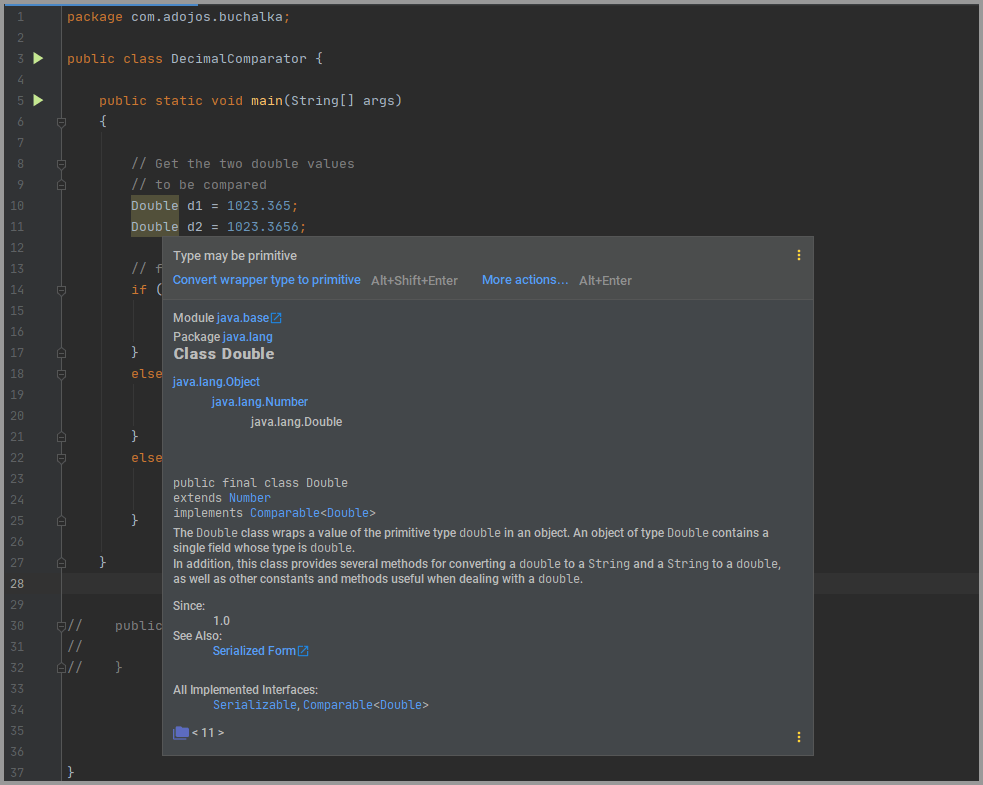


How to View Java API Doc Hints within IntelliJ

IntelliJ ‘Quick Documentation’ Feature. [Ctrl+Q or (View | Quick Documentation)]

IntelliJ Quick Documentation

So how do you generally refer your Java API Doc? If you use Google or online Java API Doc or even a locally downloaded copy then here is a better way, why not view the JavaDoc hints within IntelliJ editor itself. The article below shows the quick and easy procedure to do this, interested? keep reading.

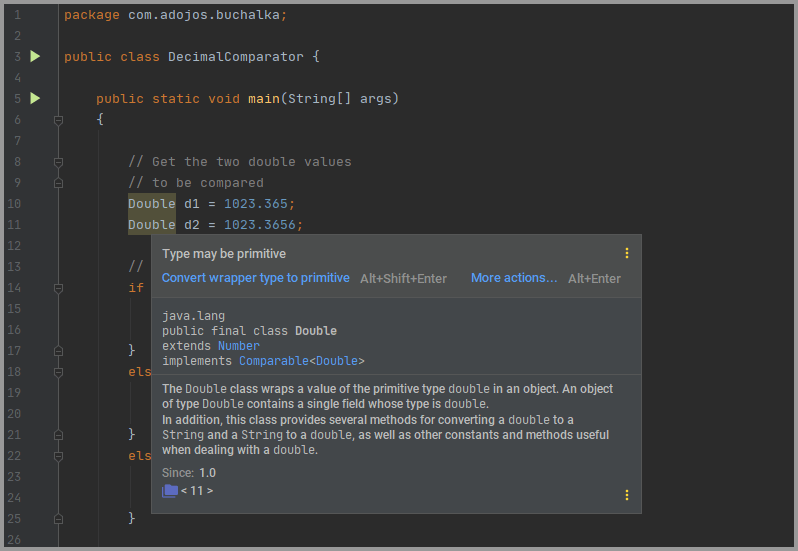
Provided you are using Java SDK, In IntelliJ IDEA, you can view Java API Doc (SDK) for any symbol or method signature right from the editor via IntelliJ feature also called ‘Quick Documentation’ which you can invoke via keyboard shortcut Ctrl+Q
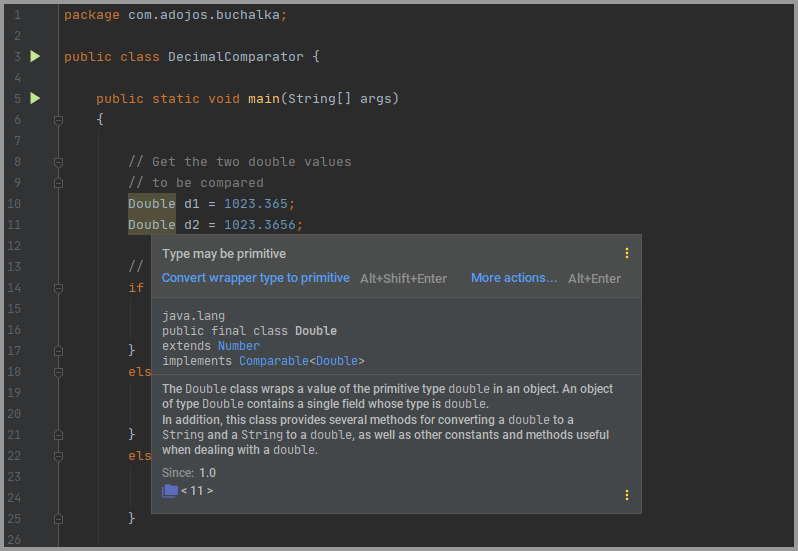
This feature should be enabled by default, if not here is how to enable it.

Enabling IntelliJ ‘Quick Documentation’

1
Open IntelliJ Settings

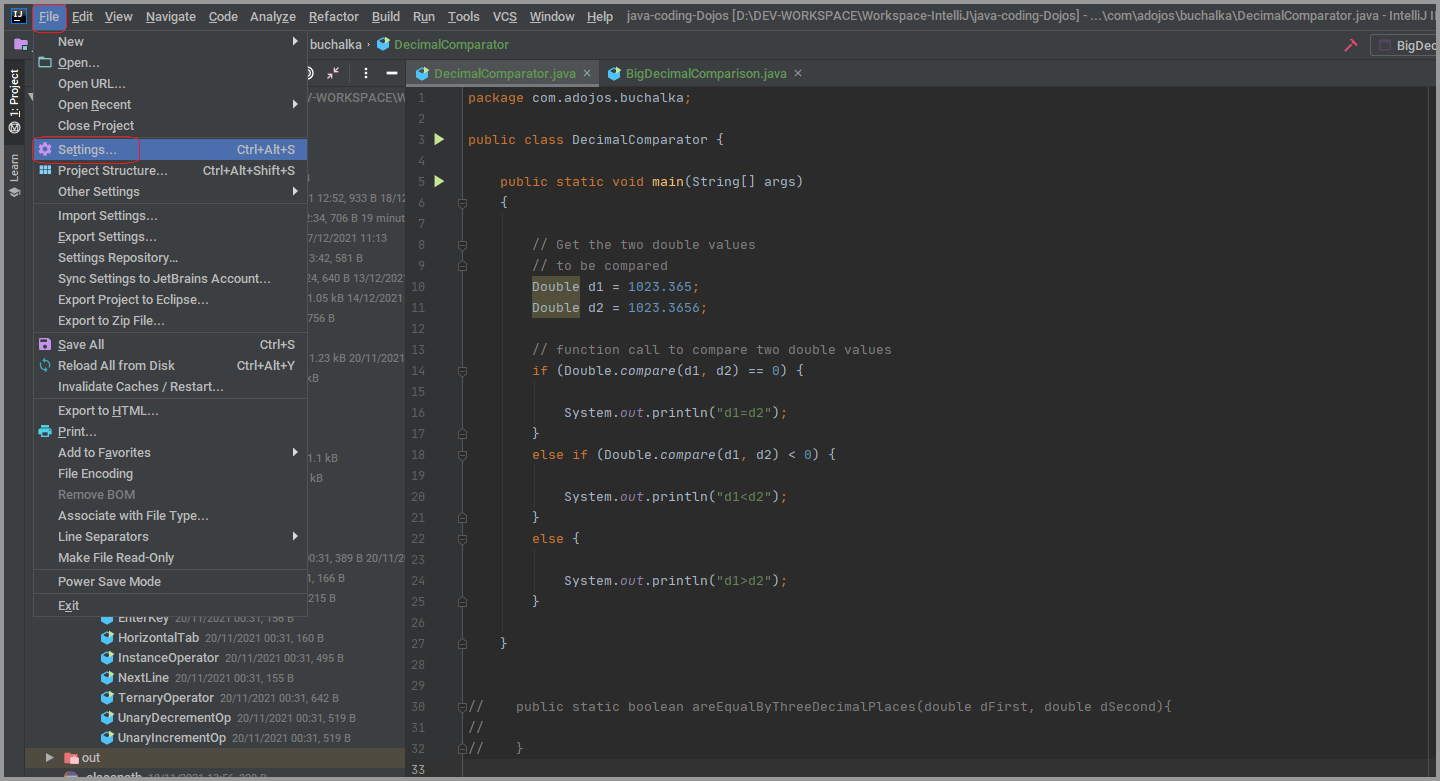
Launch the IntelliJ settings by navigating to [File | Settings]

2
Enable ‘Show documentation popup’

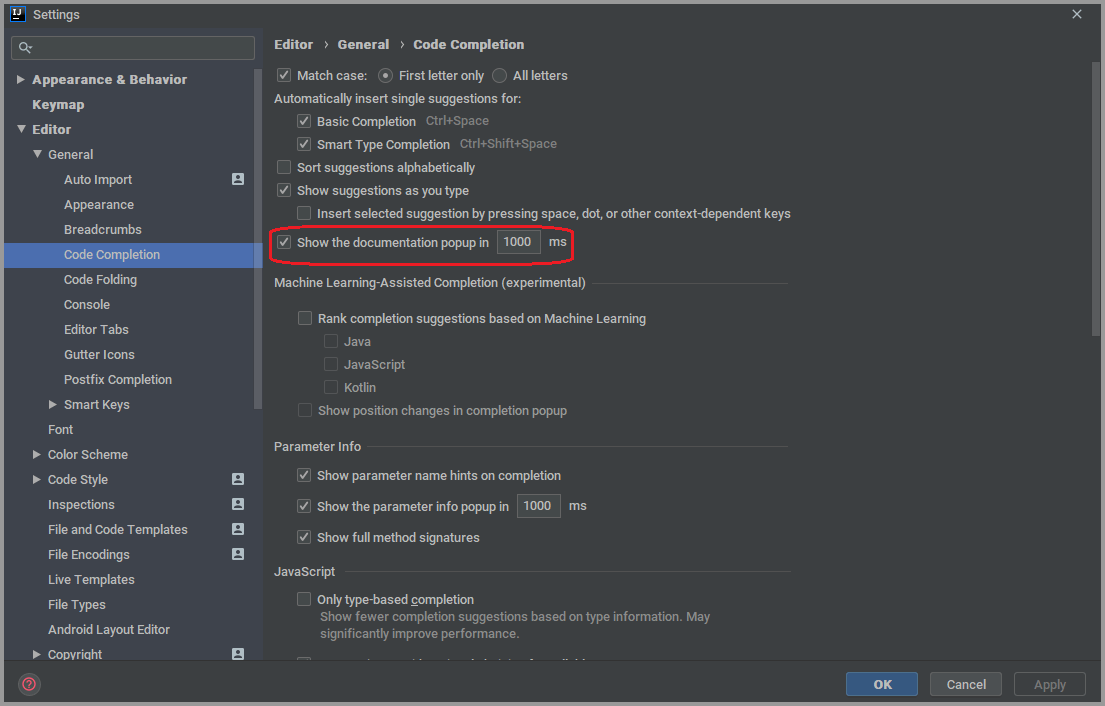
On the settings dialog box, navigate to [Editor | Code Completion] and enable the option ‘Show the documentation popup in 1000ms’ (Of course you can input whatever time value you wish) and click ‘Apply’

3
Enable ‘Documentation on mouse move’

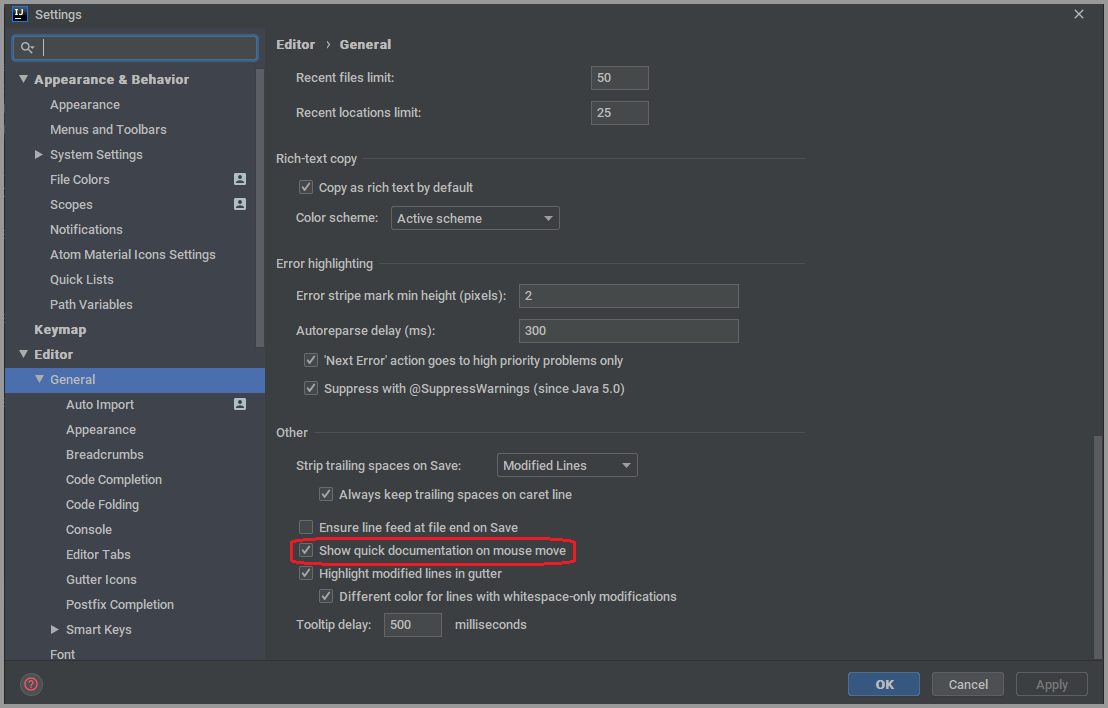
While on settings dialog box again navigate to [Editor | General] and enable the option ‘Show quick documentation on mouse move’. Click ‘Apply’ and ‘OK’.

4
Validate your changes

Check by invoking the ‘Quick Documentation’ for any piece of code by pressing Ctrl+Q while in the editor

Enhance by adding documentation URL

You can add online java SDK documentation to your IntelliJ ‘project settings’ so that you can get more enhanced information about classes, symbols and method signatures etc.

5
Locate Javadoc online documentation

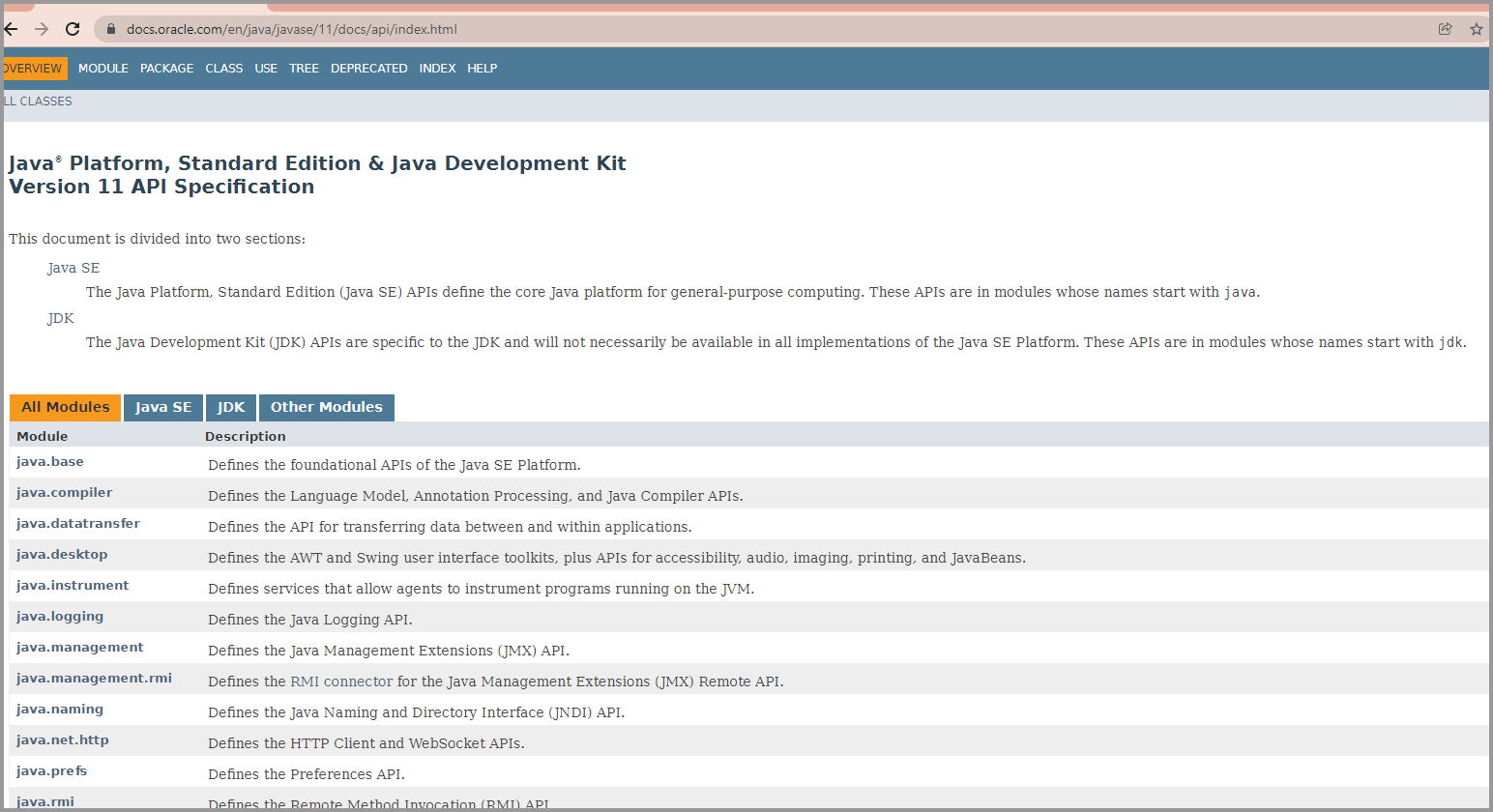
Locate the URL for your JavaDoc online. For example, the URL for Java 11 Java API Doc is – https://docs.oracle.com/en/java/javase/11/docs/api/index.html

6
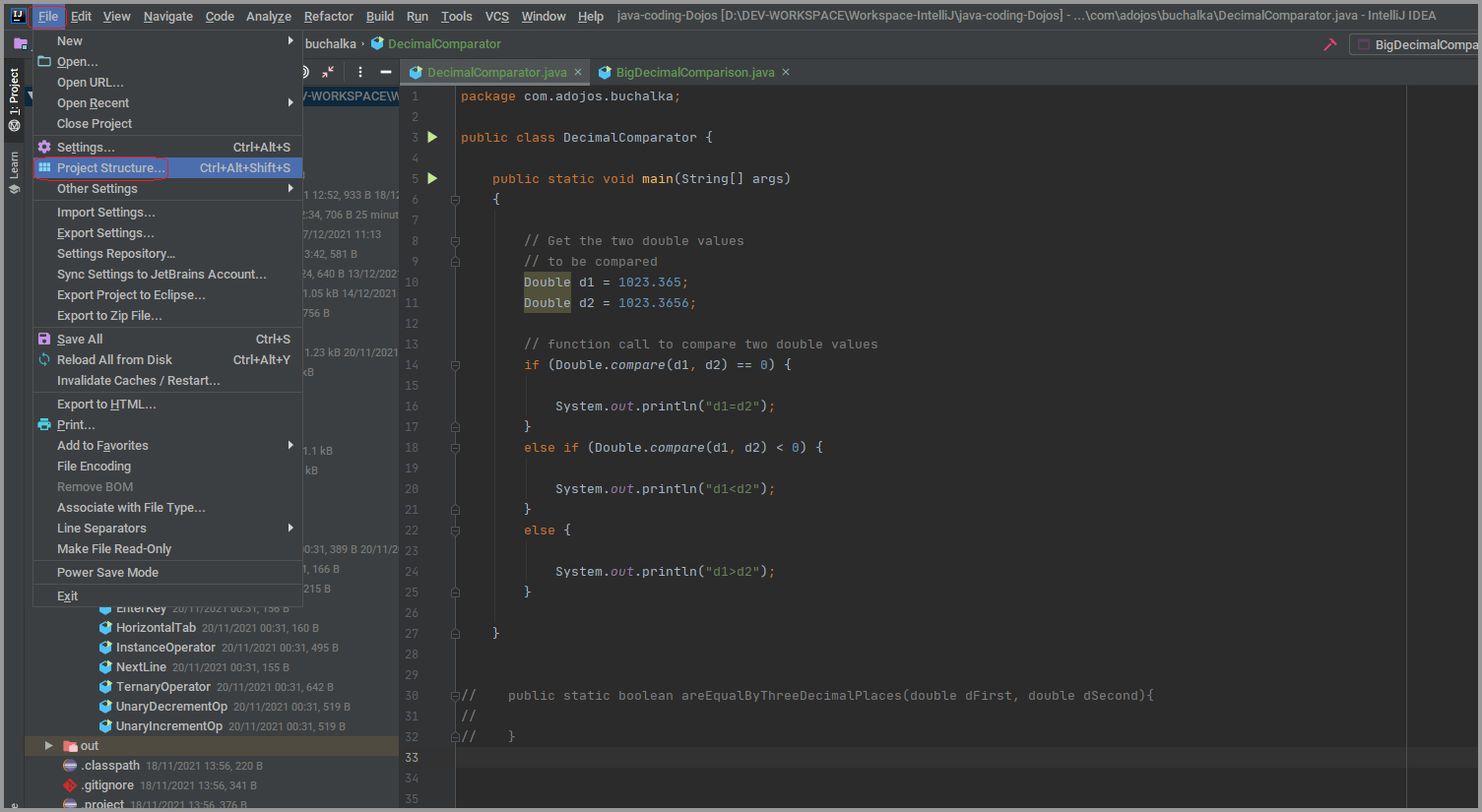
Open ‘project settings’ dialog box

On IntelliJ, launch the project settings [File | Project Structure]

7
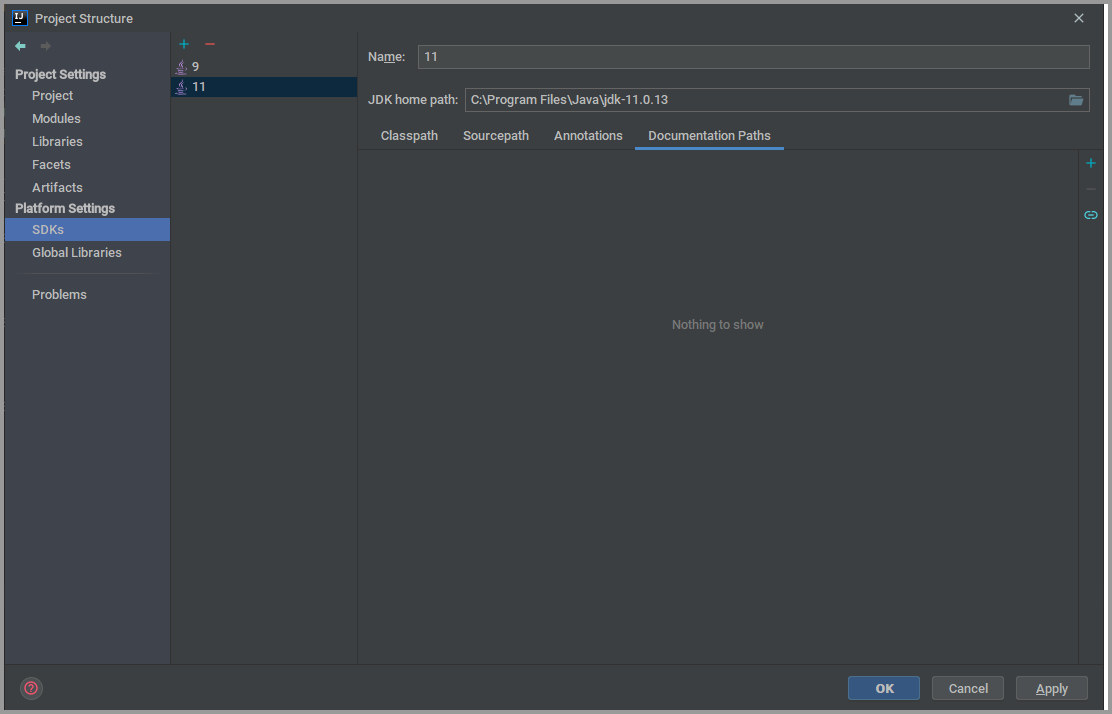
Open SDK documentation tab

On ‘project structure’ dialog box, click on ‘SDKs’ on right hand side column and then click on ‘Documentation Paths’ tab in right hand side pane

8
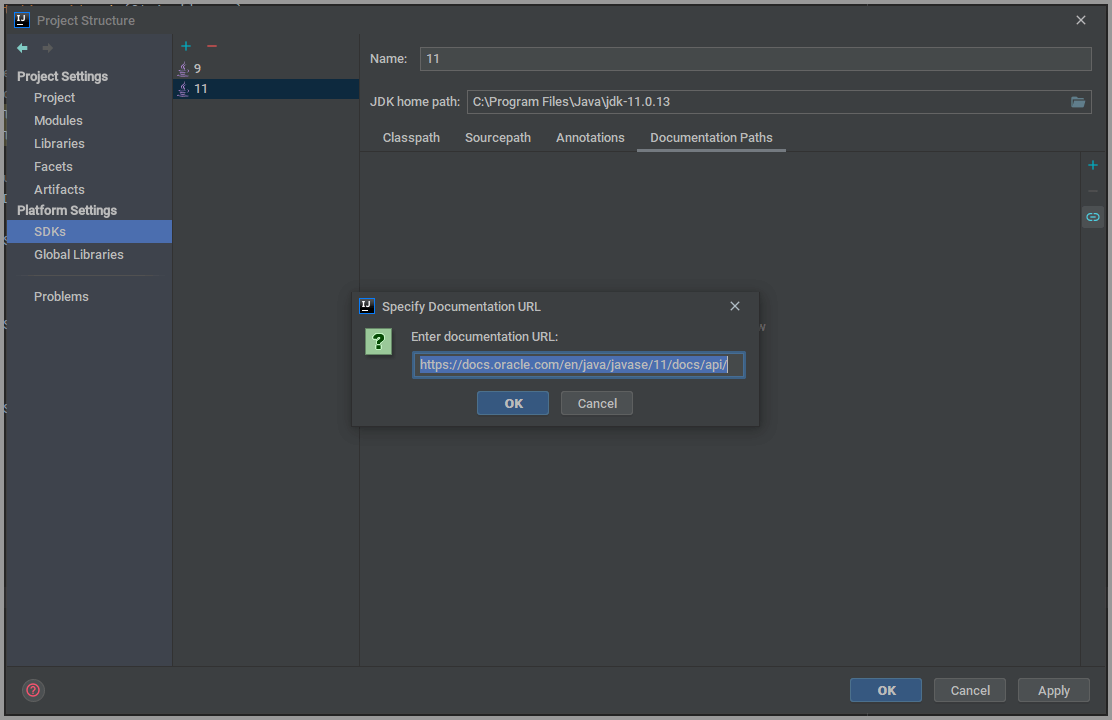
Add documentation path/url

Now add the documentation url. Click ‘Ok’ and save. That’s it!

9
Validate your changes

Check by invoking the ‘Quick Documentation’ for any piece of code by pressing Ctrl+Q while in the editor.


Tushar Sharma
Tushar Sharmahttps://www.automationdojos.com
Hi! This is Tushar, the author of 'Automation Dojos'. A passionate IT professional with a big appetite for learning, I enjoy technical content creation and curation. Hope you are having a good time! Don't forget to subscribe and stay in touch. Wishing you happy learning!

LEAVE A REPLY

Please enter your comment!
Please enter your name here

This site uses Akismet to reduce spam. Learn how your comment data is processed.

Recent Posts

RELATED POSTS

How To Add SSH Private Keys to Eclipse

One of the common use cases for accessing Git repositories on Github is authentication via SSH keys. This offers a secure way of working...

Shortcut To Auto-Insert ‘main’ Method in IntelliJ

IntelliJ Live Templates Live templates let you insert frequently-used or custom code constructs into your source code file quickly and efficiently IntelliJ IDEA comes with a...

How To Change Font for Eclipse Editor Pane

This article shows how to change the text size and style for the Eclipse editor pane. The font used for Eclipse editor pane can be...

How To Always Open Files in New Tab in VSCode

The VSCode has rocketed its way to one of the top development IDEs due to its fresh look, usability, tons of feature sets, and...

Â

RECENT 'HOW-TO'

How To Install Oh-My-Posh On Windows PowerShell

Oh-My-Posh is a powerful custom prompt engine for any shell that has the ability to adjust the prompt string with a function or variable. It does not...

MORE ON CODEX

FEATURED PROJECTS

Windows JDK Manager (win-jdk-Manager)

ADjo LABS PROJECT : Simple and lightweight desktop utility with Interactive cmd Interface for easy view, re-point and switching between JAVA versions on windows. Demonstrating the capability...

MORE IN THIS CATEGORY

How To Always Open Files in New Tab in VSCode

The VSCode has rocketed its way to one of the top development IDEs due to its fresh look, usability, tons of feature sets, and...

How To Convert String To Date in Java

Introduction There are often scenarios in programming, where you will need to convert a date in String format to an actual Date object. For example,...

How To Use Mouse and Keyboard Events with Selenium

In this tutorial, we will discuss how to use mouse click events and keyboard events with Selenium WebDriver. The mouse click and keyboard events...

How To Do Database Testing with JMeter

Introduction In this 'How-To', You will be guided to perform a database load test using JMeter. We will be installing Apache JMeter to perform the...

CHECKOUT TUTORIALS

Desired Capabilities in Selenium Web Driver

1. Desired Capabilities in Selenium The performance of a Web application may vary according to different browsers and operating systems. Hence to ship out a...
- Advertisement -spot_img