


How To Add SSH Private Keys to Eclipse

Add SSH keys for Git Workflows to Eclipse IDE

One of the common use cases for accessing Git repositories on Github is authentication via SSH keys. This offers a secure way of working with Github repositories using SSH protocol.

If you use Eclipse IDE for development and want to use the same for Git workflows like ‘commit’, ‘pull’, ‘push’ etc. you can easily do so by installing one of the Git plugins for Eclipse for example ‘EGit’. By default Eclipse (EGit) would prompt you for username/password while doing Git workflows like ‘push’, you also have the option to save your Git credentials within Eclipse so you don’t have to provide your credentials every time.

However, if you use SSH keys for Git workflows rather than username/password, here is how you can add SSH keys to Eclipse so Eclipse does not prompt you for credentials while doing Git workflows.

1
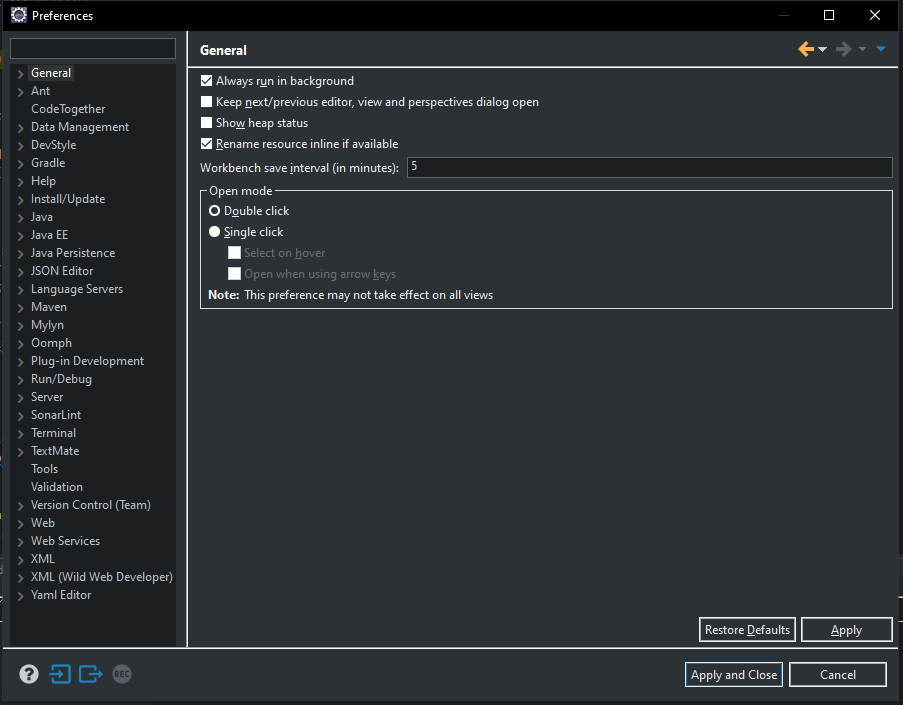
Open Eclipse Preferences

Open the Eclipse Preferences via Window > Preferences

2
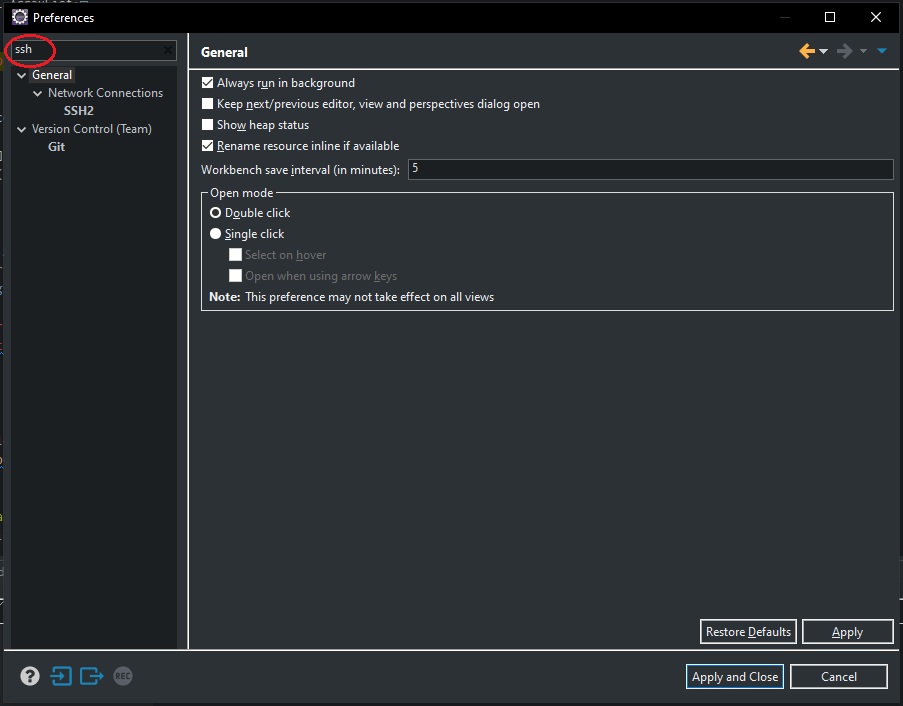
Navigate to SSH Preferences

Now type in ‘SSH’ in the search box on the ‘Preferences’ window

3
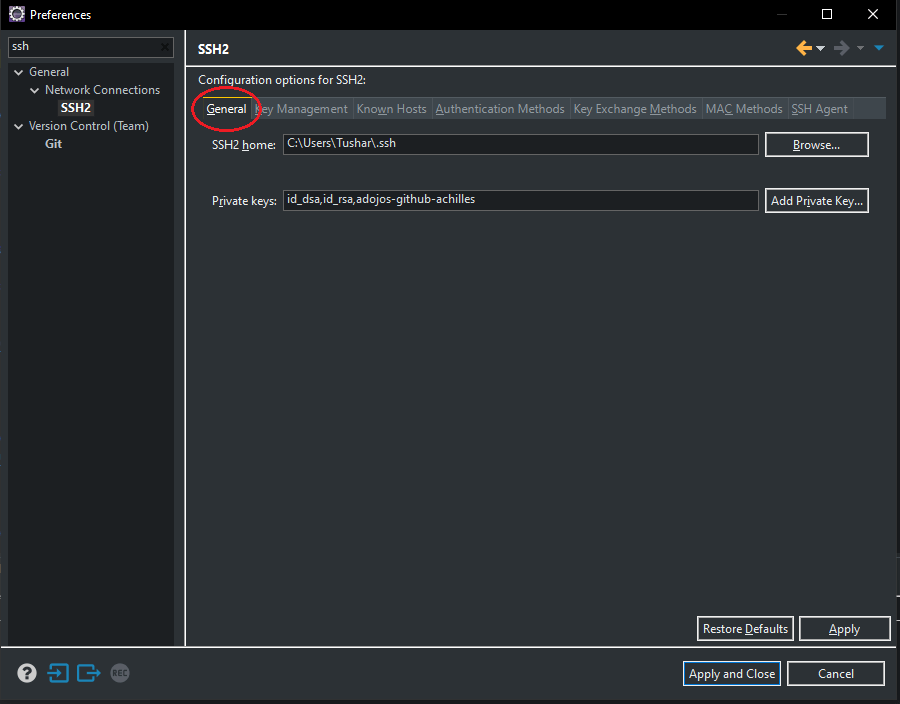
Open General SSH2 Settings

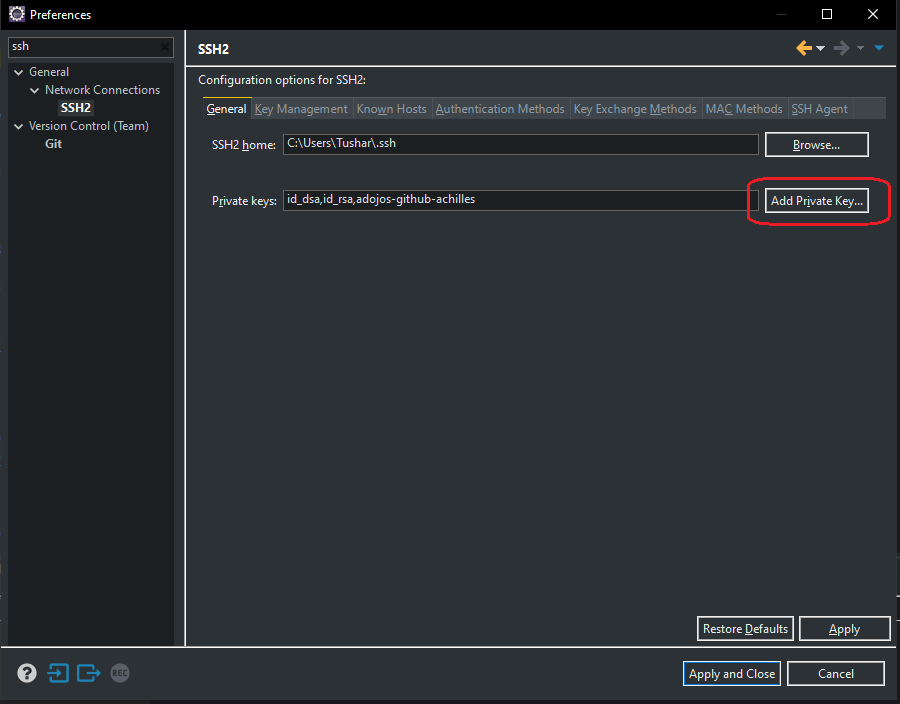
Click on ‘SSH’ under, General > Network Connections > SSH2 and open Tab named ‘General’

4
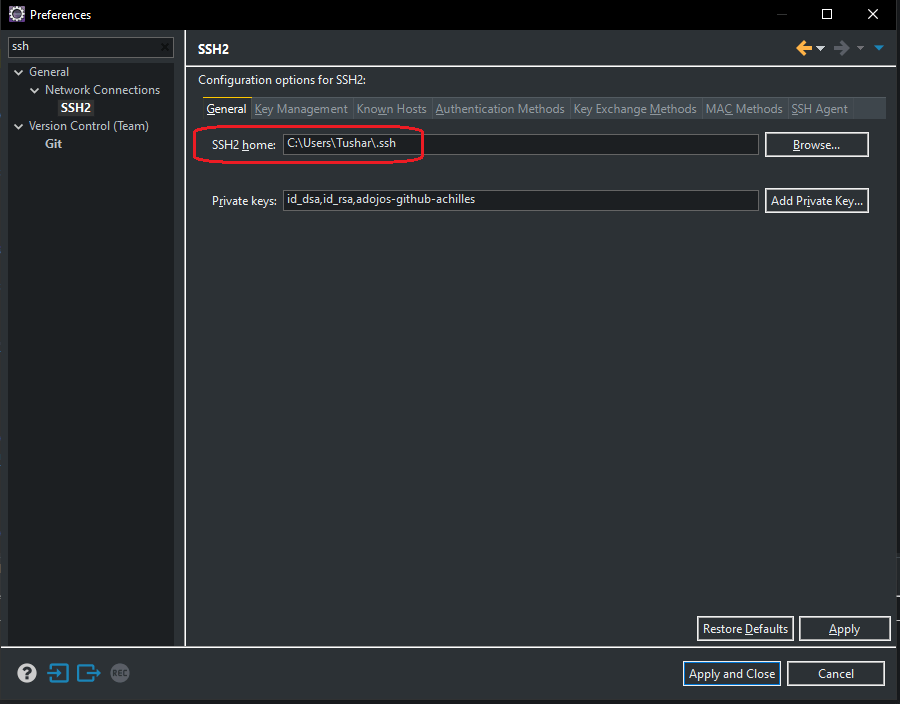
Set SSH Home Location

On the SSH preferences window, check that you have correctly set your ‘SSH2 Home’ location (path).

Assuming you have local Git installation on your system, the standard path to .ssh home would usually be ‘.ssh’ folder in the user home directory e.g <userhome>/<.ssh>

In case you store your keys somewhere else other than the standard SSH home then you can specify that location as path to SSH home.

5
Set SSH Private Key/s

While on the SSH window, now click on the ‘Add Private Key’ button and browse to the location of your SSH private key and select your SSH key.

You can specify/load multiple SSH keys using this window separated by commas.

Click Apply to save your changes.

6
Set/Verify Authentication Method

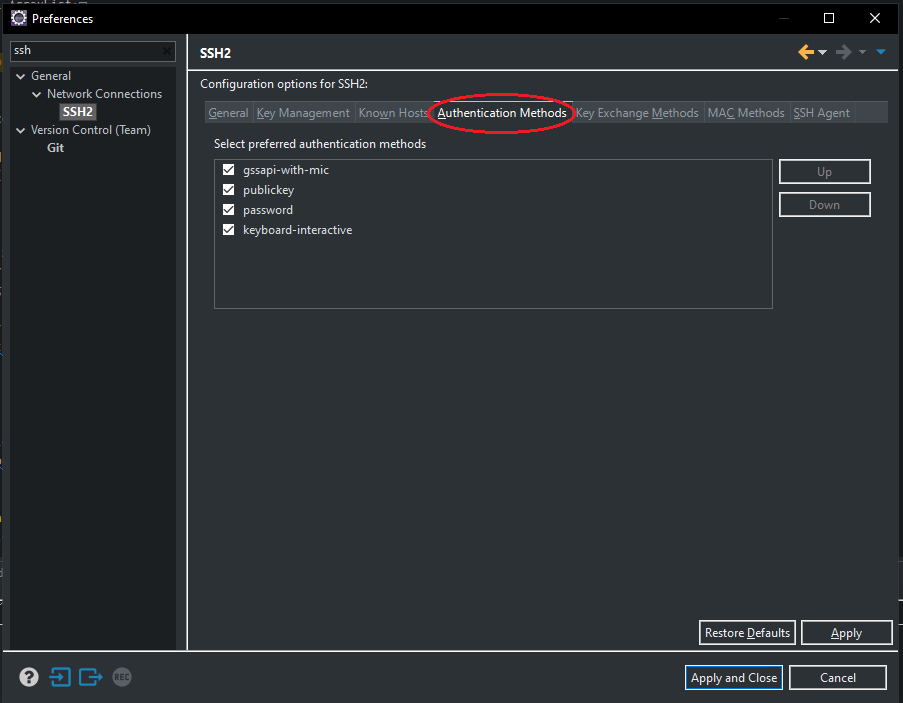
Next, while on the SSH preferences window, select the tab named ‘Authentication Methods’ and make sure you select/check the ‘publickey’ option. Click Apply to save your changes.

7
Optional: Save SSH Key ‘Passphrase’ in Secure Store
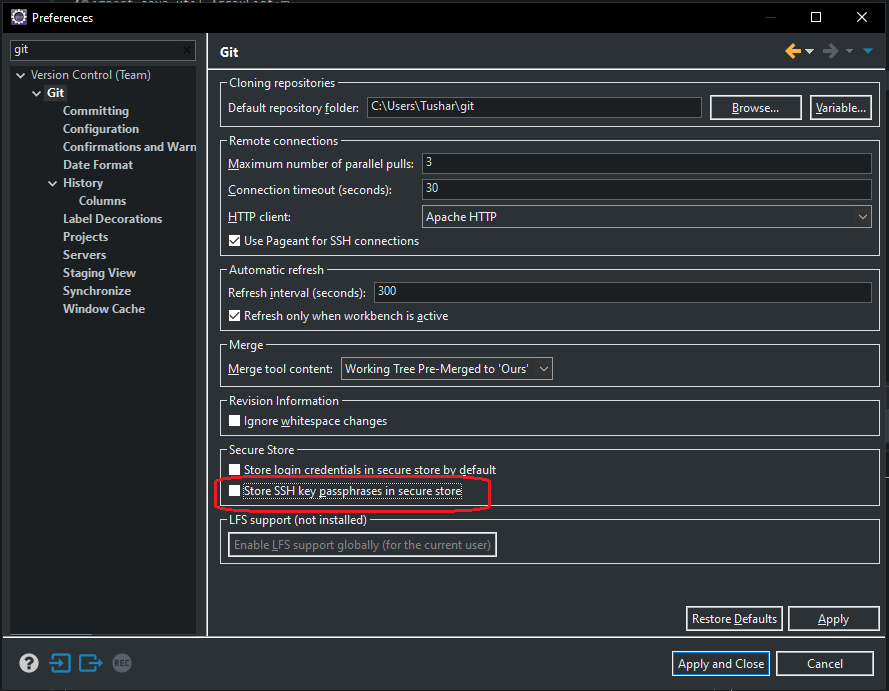
If you have a ‘passphrase’ (password) set on your SSH key then you also have the option to save your passphrase in Secure Store using Eclipse. If you save your passphrase using this option then Eclipse would not prompt you for a passphrase while doing Git workflows.

For storing your passphrase within Eclipse Secure Store, type ‘Git’ in the search box on the ‘Preferences’ window and navigate to Version Control (Team) > Git and select (check) the option ‘Store SSH Key Passphrase in secure store’

Click Apply and Close to save your changes. DONE!

Tushar Sharma
Tushar Sharmahttps://www.automationdojos.com
Hi! This is Tushar, the author of 'Automation Dojos'. A passionate IT professional with a big appetite for learning, I enjoy technical content creation and curation. Hope you are having a good time! Don't forget to subscribe and stay in touch. Wishing you happy learning!

LEAVE A REPLY

Please enter your comment!
Please enter your name here

This site uses Akismet to reduce spam. Learn how your comment data is processed.

Recent Posts

RELATED POSTS

How To Always Open Files in New Tab in VSCode

The VSCode has rocketed its way to one of the top development IDEs due to its fresh look, usability, tons of feature sets, and...

Shortcut To Auto-Insert ‘main’ Method in IntelliJ

IntelliJ Live Templates Live templates let you insert frequently-used or custom code constructs into your source code file quickly and efficiently IntelliJ IDEA comes with a...

How To Change Font for Eclipse Package Explorer

This article shows how to change the Package Explorer text size and style. The font used for tree and table views can now be customized...

Common OpenSSH Commands Reference

Secure Shell, sometimes referred to as Secure Socket Shell (SSH), is a protocol which allows you to connect securely to a remote computer or...

Â

RECENT 'HOW-TO'

How To Install Oh-My-Posh On Windows PowerShell

Oh-My-Posh is a powerful custom prompt engine for any shell that has the ability to adjust the prompt string with a function or variable. It does not...

MORE ON CODEX

FEATURED PROJECTS

Windows JDK Manager (win-jdk-Manager)

ADjo LABS PROJECT : Simple and lightweight desktop utility with Interactive cmd Interface for easy view, re-point and switching between JAVA versions on windows. Demonstrating the capability...

MORE IN THIS CATEGORY

How To Convert String To Date in Java

Introduction There are often scenarios in programming, where you will need to convert a date in String format to an actual Date object. For example,...

Getting Started With Atlassian Jira

Jira is one of the best software used for agile development. It is built for a better team contribution and to deliver an amazing...

How To Configure Virtual Hosts in XAMPP

Apache has made it very easy to have multiple websites or web applications running on the same physical server, and access each using a...

How To Use TestNG with Selenium

1. What is TestNG? TestNG is an open-source automated testing framework with flexible and powerful features. It is inspired by JUnit and NUnit but with...

CHECKOUT TUTORIALS

Working with JMeter Listeners

About Listeners Listeners are used for displaying test results in JMeter. Listeners allow system engineers to analyze the responses from the testing system and monetize...
- Advertisement -spot_img